
Product Overview
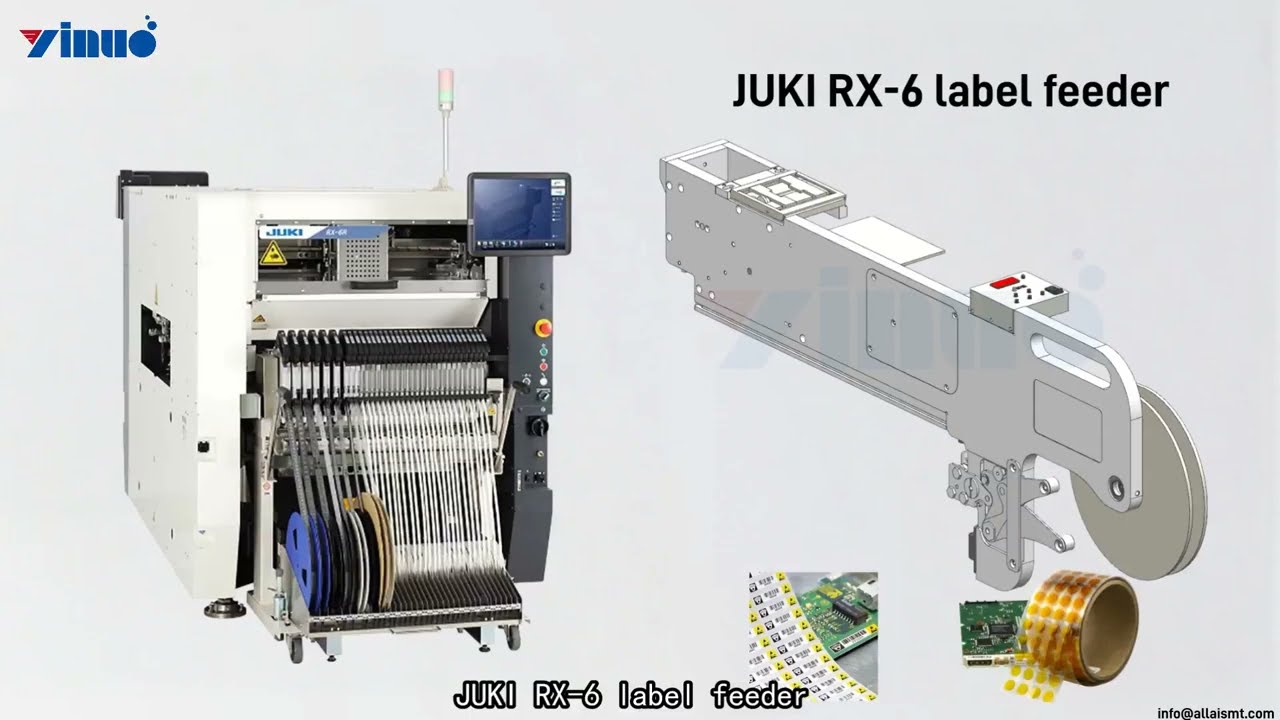
The Siemens ASM SMT PP Label Feeder is a Polypropylene (PP) label automatic feeding system designed specifically for Siemens ASM pick-and-place machines. Installed in the standard feeder slot, it uses precision mechanical structures, tension control technology, and stepper motor drive to achieve continuous and stable PP label feeding, working in coordination with the pick-and-place machine to complete the automatic labeling process. The feeder’s core value is replacing manual labeling with automatic feeding, increasing single-shift labeling output from hundreds of units to thousands, while precision positioning technology ensures PP labels are accurately applied to designated PCB coordinates without skew or offset, meeting product traceability and quality control requirements for identification accuracy. The feeder is compatible with multiple PP label specifications—the same unit handles PP label rolls of different widths, lengths, and diameters without equipment replacement, significantly reducing changeover time and capital investment. For feeding stability, tension control and stepper drive technology ensure smooth label transport without jamming, wrinkling, or deviation during high-speed pick-and-place operations, minimizing downtime and defect rates. Additionally, the feeder is optimized for PP material characteristics, accounting for Polypropylene’s good flexibility and print-friendly surface properties to ensure labels remain flat, clean, and undamaged throughout feeding, pickup, and placement, so model numbers, batch codes, and QR codes printed on PP labels remain clearly readable and accurately positioned.

ASM feeder cart
Key Features
1. Automatic Feeding Replaces Manual Labeling, 10x+ Efficiency Improvement On SMT production lines, manual labeling is inefficient and error-prone, unable to meet mass production demands. The PP label feeder works in coordination with the pick-and-place machine, continuously and precisely supplying labels to automatically complete the labeling process. For example, in consumer electronics motherboards and appliance control boards requiring model and batch label application, the feeder automatically and rapidly completes labeling tasks, increasing single-shift output from hundreds of units (manual) to thousands, while avoiding common manual errors such as missed or incorrect labels. The cost advantage is particularly significant in high-volume production environments.
2. Precision Positioning Ensures Accurate Label Placement Without Offset Through precision mechanical structures and control technology, the feeder ensures PP label positioning accuracy during feeding, enabling the pick-and-place machine to accurately pick up labels and precisely place them on designated PCB areas. Prevents label skew and offset, improving product identification accuracy and standardization. For electronic products requiring precise traceability, the feeder ensures accurate label placement, ensuring QR codes and serial numbers remain quickly readable during subsequent scanning operations and reducing traceability interruptions and quality anomalies caused by identification errors.
3. Compatible with Multiple PP Label Specifications, Reducing Changeover Costs The feeder is adjustable to accommodate PP label rolls of different widths, lengths, and diameters. SMT production may require various PP label specifications—1D barcode labels, 2D QR code labels, and alphanumeric information labels. The same feeder handles both narrow small traceability labels and wide PCB information labels without equipment replacement, reducing changeover time and equipment investment while increasing production flexibility. Particularly suitable for mixed-line production with multiple product varieties and small-to-medium batch sizes.
4. Tension Control and Stepper Drive for Stable, Jam-Free Feeding Utilizing tension control and stepper motor drive technology, the feeder ensures smooth PP label transport during feeding without jamming or wrinkling. When high-speed pick-and-place machines rapidly pick and place labels, the feeder continuously and stably supplies labels, reducing equipment downtime and product defect rates caused by feeding issues, ensuring continuous and efficient SMT line operation and minimizing labeling-process bottlenecks.
5. Optimized Design for PP Material Characteristics The PP label feeder is specifically optimized for Polypropylene’s good flexibility, print-friendly surface, and low static adhesion characteristics, preventing transport issues or print surface damage caused by material properties during feeding. Ensures PP labels remain flat, clean, and undamaged throughout the entire feeding, pickup, and placement process, so high-resolution QR codes and fine characters remain clearly readable after placement, facilitating rapid scanning and data reading during production and after-sales service.
PP Label Characteristics
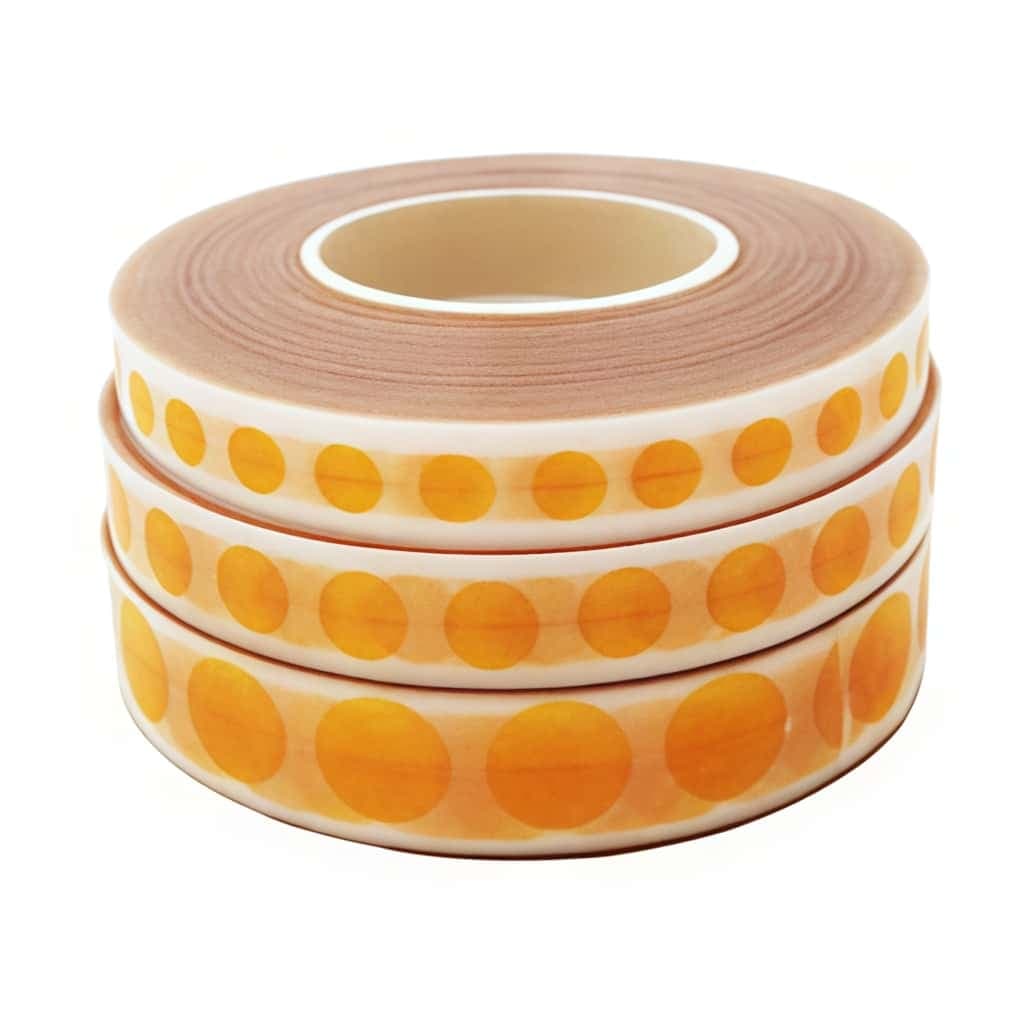
The PP labels supplied by the feeder are made from Polypropylene, offering excellent cost-performance ratio and comprehensive properties:
Good Chemical Resistance PP material demonstrates good tolerance to common chemicals in PCB production such as flux, cleaning agents, and molten solder, resisting corrosion and dissolution to ensure label integrity throughout the production process. Even after flux exposure, PP labels do not discolor or blur like some other materials, maintaining integrity of critical identification information such as product model numbers and batch codes. Suitable for PCBs that undergo chemical processes including cleaning.
Stable Physical Properties PP labels possess adequate strength and flexibility, resisting tearing or damage during PCB production, assembly, and subsequent use while maintaining firm adhesion to PCB surfaces. Additionally, PP material exhibits minimal dimensional change across different temperature and humidity environments, avoiding deformation from thermal expansion or moisture absorption. Ensures patterns, text, and QR codes on labels remain clearly readable and accurately positioned, facilitating long-term product identification, traceability, and quality control.
Excellent Cost Efficiency PP is a widely produced and relatively low-cost material. While meeting PCB identification requirements, PP labels effectively control production costs. Compared to high-performance materials such as PI and PET, PP labels achieve the optimal balance between performance and price, providing reliable identification functionality while meeting cost control requirements in large-scale SMT production. The preferred solution for cost-conscious applications.
Good Electrical Insulation PP is an excellent electrical insulator, preventing conductivity-related circuit short circuits and ensuring normal operation of electronic components and complex circuits on PCBs. Even in humid or other special environments, PP labels do not affect normal PCB operation due to conductivity, providing reliable protection for electronic product safety and stability.
Excellent Printability PP material surfaces are compatible with multiple printing processes, enabling high-quality graphic and text printing. Various identification information such as product model numbers, production dates, serial numbers, and high-resolution QR codes can be printed clearly and accurately on PP labels, facilitating production management, quality traceability, and after-sales data reading. Advanced printing technology ensures extremely high QR code scanning recognition rates, significantly improving traceability efficiency.