

Product Overview
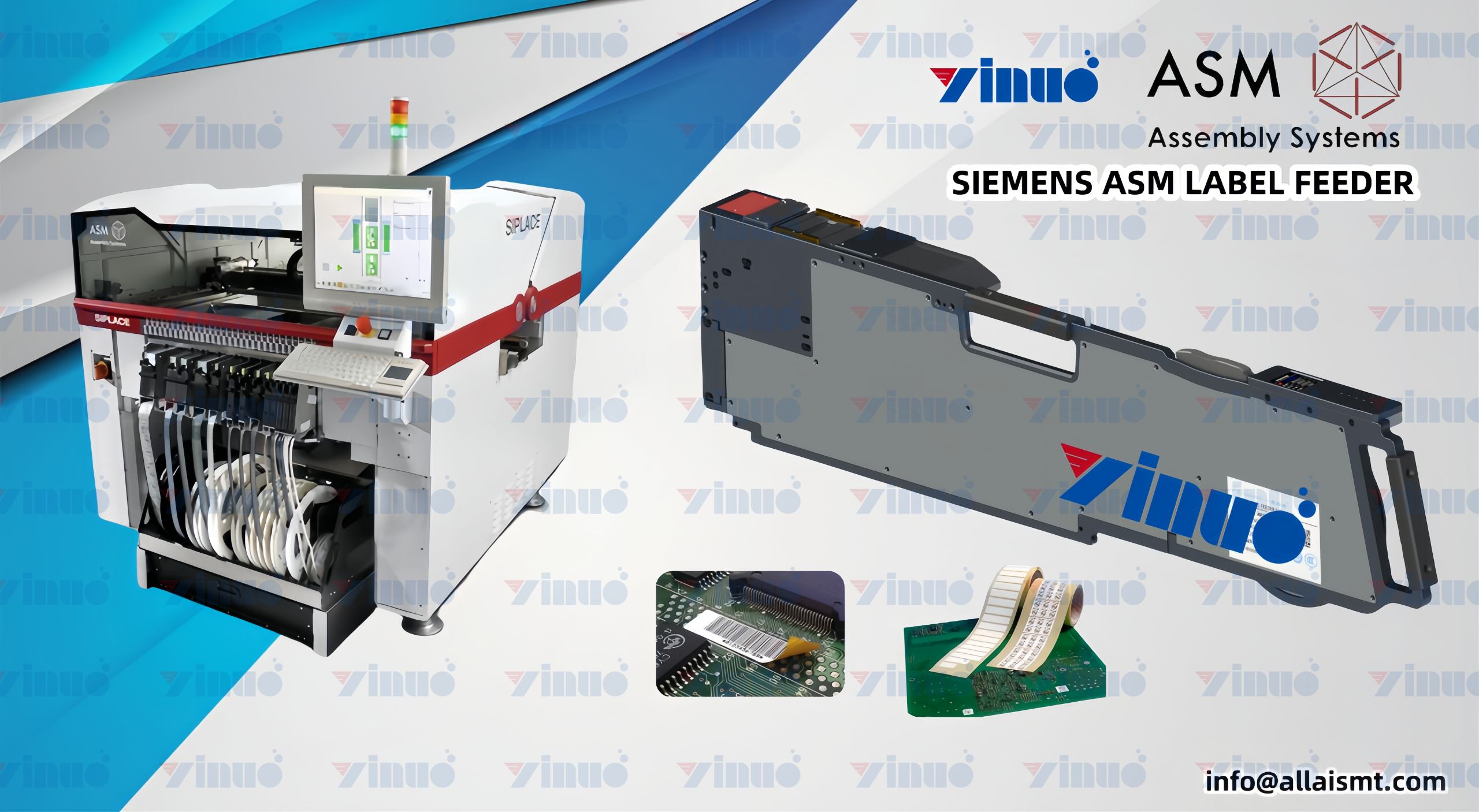
The Siemens ASM Polyimide Label Feeder for SMT Reflow Process is a Polyimide (PI) label automatic feeding system specifically designed for Siemens ASM pick-and-place machines, engineered for high-temperature SMT reflow soldering environments. Installed in the standard feeder slot, it utilizes precision mechanical structures, tension control technology, and stepper motor drive to achieve continuous and stable polyimide label feeding, coordinating with the pick-and-place machine to complete automatic labeling before the reflow process. The feeder’s core value is replacing manual labeling with automatic feeding, increasing single-shift labeling output from hundreds of units to thousands, while high-precision positioning technology ensures polyimide labels are accurately applied to designated PCB coordinates without skew or offset, establishing a solid identification foundation for subsequent high-temperature reflow processes. The feeder offers strong compatibility, accommodating polyimide label rolls of different widths, lengths, and diameters to meet diverse production requirements. For feeding stability, tension control and stepper drive technology ensure smooth label transport without jamming, wrinkling, or deviation during high-speed pick-and-place operations, minimizing downtime and defect rates. Additionally, the feeder is optimized for polyimide high-temperature characteristics, accounting for PI’s heat resistance (300℃+ short-term) and chemical corrosion resistance to ensure labels remain clearly readable without curling, detachment, or discoloration after exposure to reflow peak temperatures exceeding 270℃, meeting stringent full-cycle traceability requirements for automotive electronics, medical devices, and communication equipment.

|
Label Name
|
Label Material
|
Label Feature
|
Main Function & Usage
|
|---|---|---|---|
|
Standard High Temperature PI Label
|
Polyimide (PI) film with high-temperature adhesive
|
Heat resistant, no residue, strong adhesion
|
Used for general PCB tracking and identification before reflow soldering process.
|
|
SMT Traceability Barcode PI Label
|
Matte polyimide film, black heat-resistant barcode ink
|
High print clarity, anti-scratch, high temperature stable
|
Track PCB production data, ensure barcode readable after high-temperature reflow.
|
|
Anti-Tear Rigid PI Tag Label
|
Thickened polyimide single layer
|
Rigid, stiff, not easy to wrinkle or deform
|
Suitable for thin and small PCB boards, avoid label bending during automatic feeding.
|
|
ESD Safe PI Static Control Label
|
Polyimide with anti-static coating
|
Anti-static, dust-free, no static damage to components
|
Protect sensitive electronic components during SMT automatic labeling and reflow process.
|
|
Ultra-Thin High Temp PI Label
|
Ultra-thin polyimide film, high-temperature glue
|
Thin, flat, no warping, fits narrow PCB spaces
|
Label tiny components and narrow PCB gaps without affecting placement accuracy.
|
Key Features
1. Automatic Feeding Replaces Manual Labeling, Dual Improvement in Efficiency and Precision On SMT production lines, manual labeling is inefficient, error-prone, and unable to meet mass production demands for consistency. The Siemens ASM polyimide label feeder coordinates with the pick-and-place machine, continuously and precisely supplying PI labels to automatically complete the labeling process. Single-shift output increases from hundreds of units (manual) to thousands, while eliminating common manual errors such as missed labels, incorrect labels, and positional deviation. Ensures highly consistent identification placement on every PCB, providing a foundation for post-reflow traceability code readability.
2. High-Precision Positioning Ensures Accurate Pre-Reflow Label Placement Through precision mechanical structures and control technology, the feeder ensures polyimide label positioning accuracy meets pick-and-place machine pickup standards, enabling nozzles to accurately grasp labels and precisely place them on designated PCB coordinates. For PCBs that will undergo high-temperature reflow soldering, placement accuracy directly impacts post-solder identification readability and traceability effectiveness. The feeder prevents label skew and offset, ensuring PI labels remain in their designated areas after reflow, meeting strict identification position requirements for industry traceability systems such as IATF 16949 and ISO 13485.
3. Strong Compatibility, Adapts to Multiple Polyimide Label Specifications The feeder offers excellent compatibility, accommodating polyimide label rolls of different widths, lengths, and diameters. SMT production may require various PI label specifications including narrow traceability labels, wide information labels, 1D barcode labels, and 2D QR code labels. The same feeder handles multiple specifications without hardware replacement, significantly reducing changeover time and equipment investment while improving line flexibility and multi-variety mixed-line production capability.
4. High-Speed Feeding and Tension Control Ensures Continuous Line Operation Utilizing tension control and stepper motor drive technology, the feeder smoothly transports polyimide labels even at the rapid pickup-and-place pace of high-speed machines, without jamming, wrinkling, or deviation. Stable feeding performance reduces equipment downtime and product defect rates caused by feeding issues, ensuring efficient continuous SMT line operation before the reflow process and preventing the labeling process from becoming a production bottleneck.
5. Optimized for Polyimide High-Temperature Characteristics, Readable Identification After Reflow The polyimide label feeder is specifically designed for high-temperature process applications, accounting for PI’s physical characteristics of high-temperature resistance (300℃+ short-term) and chemical corrosion resistance. The feeder ensures labels remain flat, clean, and undamaged before placement, so PI labels remain clearly readable without curling, detachment, or discoloration after exposure to reflow peak temperatures. Meets stringent requirements for high-temperature traceability identification in premium applications such as automotive ECUs, communication base station motherboards, and medical device circuit boards.