
Fuji NXT III: A SMT Mounter on the Way Out
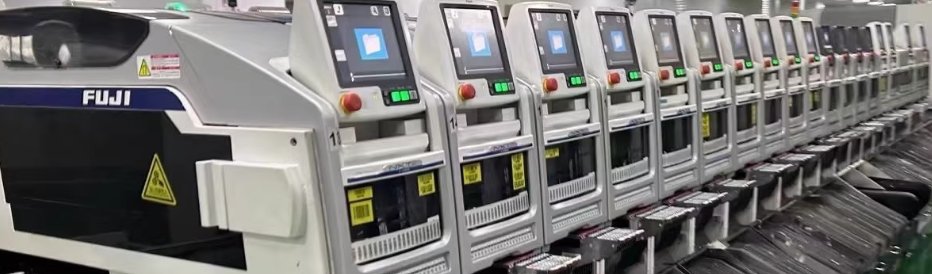
FUJI NXT 3
We’ve been in the Fuji SMT mounter business for quite a while, serving over a hundred SMT factories. Today, we’d like to talk about a piece of equipment that’s gradually becoming a thing of the past – the Fuji NXT III.
If you’ve been in the SMT industry for a few years, there’s a good chance you’ve dealt with the NXT III. This machine has been a workhorse on many production lines around the world for years. With over 75,000 modules installed in total, it has always had a good reputation. However, it’s now reaching the end of its product life cycle.

What Made the NXT III Great
The modular design was the NXT III’s main selling point. The M3 and M6 models could be freely combined and configured according to the actual requirements of the production line. Back then, this was really an advanced design.
Technologically, the NXT III could place 0201 metric ultra – small components with an accuracy of ±25μm. When equipped with a Fly Vision camera, its identification speed was quite fast. It could handle everything from mobile phone motherboards to automotive electronics and network equipment.
Stability was the real reason it could serve for so many years. When paired with the original Fuji label feeders, it had a fast material – change speed and accurate identification. For years, it has been the standard choice for many factories.
Discontinuation: It’s Not About Poor Sales, but Normal Industry Iteration
A lot of people have a misunderstanding. They think that when a product is discontinued, it means it has been phased out by the market. But that’s not the case.
The NXT III was released around 2013 and has been in operation for over a decade. In the SMT industry, the normal product iteration cycle is usually seven to eight years. Models that can last ten years are really rare.
Fuji made this decision mainly for three reasons:
Changing demands. Orders have become more fragmented, and small – batch, multi – variety production has become the mainstream. The old way of having workers monitor machine change – overs is becoming less and less cost – effective. By today’s standards, the NXT III’s automation can only be considered “usable”, and it’s still far from “user – friendly”.
The new NXTR platform has a brand – new architecture.It’s not an upgraded version of the NXT III. Instead, it’s been redesigned for smart factories, aiming to minimize human – machine collaboration and bring unplanned downtime close to zero. No matter how much you optimize the old architecture, you can’t bridge the gap in the underlying logic.
Resource transfer. Fuji’s R & D, service, and spare – part supply are all shifting towards the NXTR. The original factory support that the NXT III can get will gradually decrease year by year. This is an objective law of the product life cycle, not just a problem unique to Fuji.
The Price of Second – hand Machines Has Dropped
After the NXT III entered its final stage, an obvious trend emerged in the market: new machines have basically stopped production, and the price of second-hand machines has been continuously dropping.
Fuji NXT III M3 module: Second-hand, starting at around $36,300. The condition of the machine varies greatly depending on the year of production and usage duration.
Fuji NXT III M6 module: Low-priced sources are in the range of $10,200 – $14,500. The price can vary significantly depending on the configuration and machine condition.
Single-module base+single-head: Offers the best cost – performance ratio and is suitable for small – batch production with limited budgets.
Although the price has dropped, there are still issues. Older machines may have accuracy deviations, and the aging of electrical components can bring hidden maintenance costs. Before buying, it’s essential to have a comprehensive inspection by a professional supplier. This step can’t be skipped.
Spare Parts Are Still Available for Now
For factories currently using the NXT III, spare parts are the most practical concern.
As long – term suppliers of SMT equipment and Fuji spare parts, spare parts are still relatively abundant in the domestic market at this stage.
Fuji nozzles: There’s a large stock in the market, with both original and high – quality alternatives available. Inferior nozzles will directly affect the placement yield, so don’t just go for the cheapest option.
Fuji lfeeders: These are the main accessories for the NXT III. The supply is stable, and some models support remanufacturing and resale after receiving raw materials.
Fuji spare parts (mechanical structural parts, belts, motors, camera modules, etc.): Popular models have a lot of stock, while less common models need to be ordered.
One thing to be clear about: The current stable supply doesn’t mean there won’t be
FUJI NXT is discontinued

Add comment