
Stable and Efficient High-Density PCB Placement
As a modular high-speed and multi-functional placement machine, the FUJI NXT IIIc has become the core equipment for high-density PCB production, relying on its compact layout, high-precision placement and flexible adaptability. Its two models, M3 IIIc and M6 IIIc, have their own focuses in feeding capacity, placement head adaptation, placement accuracy and productivity. However, to give full play to the equipment performance and improve the placement yield of high-density PCBs (including 0201, 01005 and other miniature components), the key lies in accurately grasping details and strictly matching official parameters. Combined with the official specifications of NXT IIIc, the following decomposes 10 core practical points, all data comes from the official calibration of the equipment to ensure technical accuracy and operability. (FUJI NXT placement head, FUJI NXT nozzle, FUJI NXT IIIc placement head)
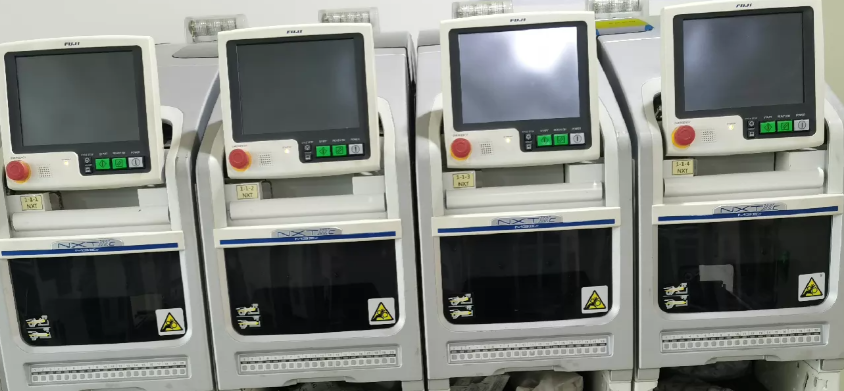
I. Placement Head Selection: Accurately Match Placement Requirements and Lay a Solid Foundation for Accuracy
The placement accuracy and productivity of the FUJI NXT IIIc depend on the selection and status of the placement head. The parameter differences of different placement heads directly determine the type of applicable components and placement effect. The officially calibrated parameters are as follows: (FUJI NXT H24S placement head, FUJI NXT H02F placement head, FUJI NXT G04F placement head)
| 项目 | M3 IIIc | M6 IIIc |
|---|---|---|
| 供料器料槽数 | 20 | 45 |
| 改装工作头 | H24S、H24A、V12、H12HS(Q)、H08(Q)、H04SF、H04、H02F、H01、GL、G04F(Q) | H24S、H24A、V12、H12HS(Q)、H08(Q)、H04SF、H04、H02F、H01、GL、G04F(Q)、DX、H08M(Q)、OF |
| H24S/H24A产能 | 标准 35000cph 生产优先 42000cph | 标准 35000cph 生产优先 42000cph |
| H24S/H24A精度 | ±0.025mm (Cpk≥1.00) ±0.015mm | ±0.025mm (Cpk≥1.00) ±0.015mm |
| H08M产能 | — | 标准 13000cph 生产优先 14000cph |
| H02F产能 | 标准 6700cph 生产优先 7400cph | 标准 6700cph 生产优先 7400cph |
| 电源 | 电压200-230V±10% | 电压200-230V±10% |
| 气源 | 0.5兆帕 | 0.5兆帕 |
- H24S/H24A Placement Head: Universal for all models (M3 IIIc, M6 IIIc), it is the core choice for high-speed placement. The placement accuracy in standard mode is ±0.025mm (Cpk≧1.00), and can reach ±0.015mm (Cpk≧1.00) in high-precision mode; in terms of productivity, it is 35,000 cph in standard mode and can be increased to 42,000 cph in production priority mode (all under the best enterprise test conditions), suitable for batch placement of conventional and miniature components. It is equipped with high-precision FUJI NXT nozzles to ensure stable component adsorption.
- H08M Placement Head: Universal for all models, the placement accuracy in standard mode is ±0.040mm (Cpk≧1.00), the standard productivity is 13,000 cph, and 14,000 cph in production priority mode, suitable for placement of medium-sized components, balancing accuracy and efficiency. Matching dedicated FUJI NXT nozzles can effectively reduce component flying and misplacement.
- H02F Placement Head: Universal for all models, the placement accuracy is ±0.025mm (Cpk≧1.00), the standard productivity is 6,700 cph, and 7,400 cph in production priority mode, suitable for placement of large-size, high-precision components and connectors. The matching FUJI NXT nozzle has strong suction and good wear resistance.
- Exclusive Placement Heads: Three models, DX, H08M(Q) and OF, are only compatible with the M6 IIIc model, which can meet the placement needs of special-specification components and further expand the equipment adaptation range. (FUJI NXT DX placement head, FUJI NXT H08M placement head)
- Other Universal Placement Heads: V12, H12HS, H12HSQ, H08,H08Q H04SF, H04, H01, GL, G04F(Q), H12S, are compatible with all models, and can be flexibly selected according to component size and type, covering the full-scenario placement from miniature components to large devices. Each placement head is equipped with corresponding FUJI NXT nozzles to ensure placement accuracy.
Practical Points: For high-density PCB placement (such as 0201 and 01005 components), the H24S/H24A placement head (high-precision mode) is preferred to ensure that the placement accuracy meets the standard; for large-size components, the H02F placement head can be selected to avoid misplacement and component flying caused by improper placement head adaptation. At the same time, it is necessary to regularly check the status of the placement head and the matching FUJI NXT nozzle to ensure consistency with the officially calibrated accuracy.
II. Nozzle Management: Match Placement Heads and Components to Eliminate Accuracy Hidden Dangers
As the direct executive component for component adsorption and placement, the nozzle directly affects the placement accuracy of H24S/H24A, H08M and other placement heads. Combined with the characteristics of the NXT IIIc equipment, the following points need to be focused on: (FUJI NXT nozzle, FUJI NXT ceramic nozzle, FUJI NXT miniature component nozzle)
- Accurate Specification Matching: The nozzle aperture and material must be strictly matched with the component size and placement head model (such as H24S placement head matched with special ceramic nozzles for miniature components). The high-quality FUJI NXT nozzle can avoid unstable suction and component tilting caused by inconsistent apertures.
- Regular Cleaning and Inspection: Before starting the machine and changing the line every day, clean the nozzle end face with isopropanol to remove dust and solder paste residues; perform ultrasonic deep cleaning on the FUJI NXT nozzle every week to ensure no stubborn stains; spot-check the wear of the nozzle every shift. If the accuracy deviation exceeds the officially allowed range (±0.005mm), replace it immediately.
- Spare Parts Reserve: Sufficient spare parts should be prepared for commonly used nozzles (especially the FUJI NXT nozzles supporting H24S/H24A placement heads for miniature components) to avoid placement interruption and affect production efficiency due to nozzle damage.
III. Tape and Feeder: Standardize Operation to Ensure Accurate Pickup
The official parameters of the feeding capacity of the FUJI NXT IIIc are clear: the number of feeder slots for M3 IIIc is 20, and 45 for M6 IIIc, both supporting tape feeders, tube feeders, tray units and other supply units. The feeding stability directly determines the pickup accuracy, and then affects the placement yiel

d. The matching of the feeder and the FUJI NXT nozzle is also an important factor to ensure pickup accuracy.
Practical Points:
- When threading the tape, it must be kept flat and tight, without curling or creases, and the front and back directions are correct. After inserting the feeder into the material position, confirm that it is clamped tightly to avoid pickup deviation caused by loose or deviated tape (in high-density PCB placement, a pickup deviation of 0.1mm can lead to pad misalignment). The flat tape can ensure that the FUJI NXT nozzle accurately adsorbs components.
- Calibrate the feeder guide wheel and baffle when changing the line, so that the pickup point is directly opposite the geometric center of the component. For the miniature component area, manual teaching confirmation is required to ensure that the pickup position is consistent with the adsorption trajectory of the placement head and the FUJI NXT nozzle.
- For special components such as tube-mounted ICs and BGAs, adjust the feeder parameters to the officially recommended range to avoid jamming and adsorption angle deviation. The correct feeder parameters can cooperate with the FUJI NXT nozzle to improve pickup stability.
IV. Placement Speed and Pressure: Set by Parameter Level, Stability First
Combined with the official productivity parameters of each placement head of NXT IIIc, high-density PCB placement needs to abandon the misunderstanding of “blind speed increase”, and set the speed and pressure according to the placement head model and component size to ensure the balance between accuracy and efficiency. The reasonable setting of speed and pressure can effectively protect the FUJI NXT nozzle and components.
- H24S/H24A Placement Head: When placing miniature components (0201, 01005), select the high-precision mode, control the placement speed in the medium and low speed range recommended by the official (avoid exceeding 42,000 cph in the production priority mode), and adjust the down pressure to 0.3-0.8N to prevent component damage and pad collapse. The appropriate pressure can also avoid excessive wear of the FUJI NXT nozzle.
- H08M/H02F Placement Head: When placing medium-sized and large-sized components, the speed can be adjusted according to the official productivity parameters (H08M standard 13,000 cph, H02F standard 6,700 cph), and the pressure can be fine-tuned according to the component thickness to ensure firm placement without damage. The matching FUJI NXT nozzle can adapt to different pressure ranges.
- Trial Board Calibration: Before running a new board or a new model, a trial board test must be carried out. The pressure curve and placement deviation are real-time monitored through the equipment system, and the parameters are optimized to the accuracy range calibrated by the official (such as ±0.015mm in the high-precision mode of H24S). Mass production can be carried out only after confirmation of stability. The trial board process can also check the matching degree of the FUJI NXT placement head and nozzle.
V. Vision Recognition System: Calibrate Parameters to Ensure Accurate Alignment
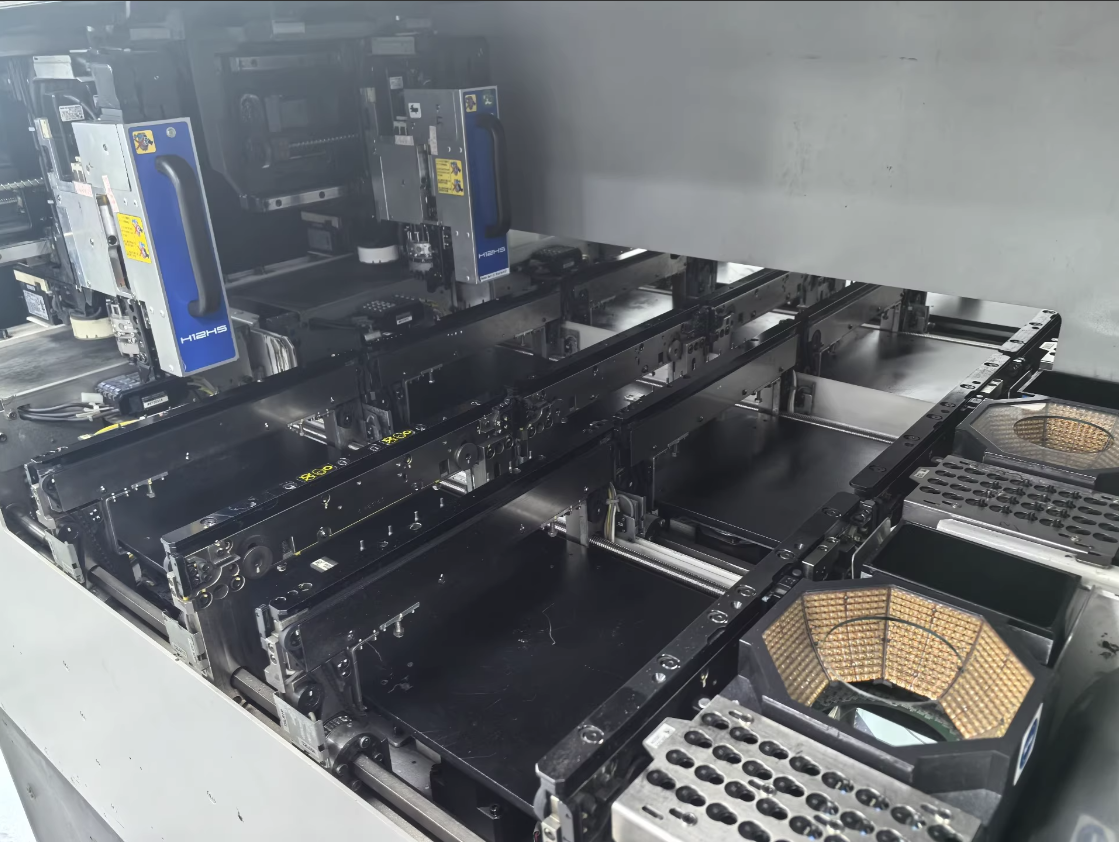
The FUJI NXT IIIc is equipped with a high-precision multi-camera vision system. The realization of its placement accuracy (±0.015mm-±0.040mm) depends on the correct calibration and parameter setting of the vision system. The following requirements must be followed in practice. The accurate recognition of the vision system can cooperate with the FUJI NXT placement head and nozzle to improve placement accuracy.
- Calibrate the vision camera regularly, and perform a full-system vision calibration every 3 months to ensure that the recognition accuracy meets the official standard (matching the placement head accuracy, such as the camera recognition accuracy corresponding to the high-precision mode of H24S is within ±5μm). Accurate camera calibration can ensure that the FUJI NXT nozzle adsorbs components and places them in the correct position.
- Adjust the light source according to the component type: red ring light is preferred for miniature components to enhance the contrast of electrode contours; polarizing filter mode is turned on for reflective components (such as LEDs and tantalum capacitors) to eliminate reflective interference and ensure clear identification of component features. Clear component features can help the FUJI NXT placement head and nozzle complete placement accurately.
- Optimize the visual algorithm parameters for the miniature pads and metal-filled areas on the high-density PCB to avoid alignment errors caused by blurred recognition, and ensure that the placement deviation is controlled within the officially allowed range (Cpk≧1.00). The optimized visual parameters can improve the coordination between
- the vision system, the FUJI NXT placement head and the nozzle.
VI. PCB Fixing and Fixture: Ensure Flatness and Eliminate Warpage Impact
The FUJI NXT IIIc has extremely high requirements for the flatness of PCB fixing. Combined with the official PCB size parameters (M3 IIIc single handling track 48×48~305×380mm, M6 IIIc single handling track 48×48~610×380mm), the following points need to be focused on. The flat PCB can ensure that the FUJI NXT placement head and nozzle place components stably.
- Select a high-precision fixture dedicated to NXT IIIc to ensure that the PCB is completely attached to the equipment platform without warpage or shaking. Especially for multi-layer boards, flexible boards and large-size thin boards, thimbles or support carriers need to be added to uniformly support the substrate to avoid substrate deformation during placement. The stable substrate can avoid the deviation of the FUJI NXT nozzle during placement.
- Re-calibrate the parallelism between the fixture and the platform when changing the line, clean the positioning surface of the fixture, avoid PCB positioning deviation caused by solder paste and dust residues, and ensure that the PCB coordinates are consistent with the placement program coordinates. Accurate PCB positioning is the premise for the FUJI NXT placement head and nozzle to complete accurate placement.
- Select the corresponding handling track mode (single handling, double handling single track/double track) according to the PCB size, and strictly follow the officially recommended PCB size range to avoid substrate shaking caused by improper track adaptation. The stable track can ensure the stable movement of the FUJI NXT placement head and nozzle.
。
VII. Solder Paste Printing: Match Placement Accuracy and Strictly Control Quality
The quality of solder paste printing directly affects the placement effect of NXT IIIc. Combined with the equipment placement accuracy (±0.015mm-±0.040mm), the printing parameters must be strictly controlled. The uniform solder paste can ensure that the components adsorbed by the FUJI NXT nozzle are firmly attached to the pad.
- For the miniature component (0201, 01005) area, a 0.08mm thick laser-cut stencil is selected, and the opening is designed as a rounded rectangle to reduce solder paste accumulation and ensure uniform and appropriate solder paste volume. The appropriate solder paste volume can avoid component floating and tilting after placement by the FUJI NXT nozzle.
- AOI inspection must be performed after printing to ensure that the solder paste of each pad meets the officially recommended standard, without bridging, missing printing, excessive thickness or excessive thinness, so as to avoid component floating, tilting and short circuit caused by solder paste problems. The qualified solder paste printing can cooperate with the FUJI NXT placement head and nozzle to improve the placement yield.
- Synchronously calibrate the stencil and PCB alignment when changing the line to ensure that the printing coordinates are consistent with the NXT IIIc placement program coordinates, and reduce the impact of printing deviation on the placement accuracy. The consistent coordinates can ensure that the components adsorbed by the FUJI NXT nozzle are accurately placed on the pad.
VIII. Placement Sequence: Optimize Path to Avoid Interference
Combined with the modular layout characteristics of NXT IIIc (single module covers 0.46㎡, and the module spacing can be set to 60mm when built back-to-back) and the placement head adaptation characteristics, the placement sequence must follow the following principles to balance accuracy and efficiency. The reasonable placement sequence can reduce the movement distance of the FUJI NXT placement head and nozzle and improve efficiency.
- Strictly follow the principle of “small components first, large components later”: give priority to placing miniature components such as 01005 and 0201 (select H24S/H24A placement head), and then place large components such as QFP, BGA and connectors (select H02F/H08M placement head) to avoid large components blocking the camera field of view and generating vibration to interfere with the placement of miniature components. This can also reduce the wear of the FUJI NXT nozzle.
- Use the “intelligent sequence optimization” function of NXT IIIc to automatically plan the placement path, reduce the idle movement distance of the placement head, avoid cross placement paths and component interference, and give full play to the high-speed placement advantage of the equipment (such as 42,000 cph in the production priority mode of H24S). The optimized path can improve the service life of the FUJI NXT placement head and nozzle.
- When the M6 IIIc model is equipped with exclusive placement heads such as DX and H08M(Q), its placement sequence needs to be planned separately to avoid interference with universal placement heads and ensure smooth placement. The independent placement sequence can also ensure the stable operation of the matching FUJI NXT nozzle.
IX. Environment and Equipment Parameters: Meet Official Standards to Ensure Stable Operation

The official operating parameters of the FUJI NXT IIIc are clear. It is necessary to strictly control the production environment and the basic parameters of the equipment to avoid environmental factors affecting the placement accuracy. The appropriate environment can also protect the FUJI NXT placement head and nozzle from damage.
- Environment Control: The workshop temperature is controlled at 23±3℃, and the humidity is 45%-60%. A temperature and humidity monitor is equipped to adjust in time when exceeding the standard; the workshop is equipped with a high-efficiency air filter to reduce dust pollution and avoid dust entering the equipment, affecting the accuracy of the placement head and vision camera. A clean environment can avoid dust adhering to the FUJI NXT nozzle and affecting adsorption accuracy.
- Basic Equipment Parameters: The power supply adopts three-phase 200-230V±10% (50/60Hz), and the air source pressure is 0.5MPa (ANR). It is strictly debugged according to the official parameters to avoid unstable equipment operation caused by voltage and air pressure fluctuations, which affects the placement accuracy and productivity. Stable power supply and air pressure can ensure the stable operation of the FUJI NXT placement head and nozzle.
- Component and Solder Paste Storage: Store components and solder paste in accordance with official specifications to avoid moisture and oxidation. Especially for miniature components, the storage environment must be consistent with the production environment to reduce unstable adsorption caused by component moisture. The dry storage environment can also avoid corrosion of the FUJI NXT nozzle.
X. Data Recording and Traceability: Rely on Equipment Functions for Continuous Optimization
The FUJI NXT IIIc supports full-process data traceability. Combined with the official equipment parameters, doing a good job in data recording and review is the key to continuously improving the placement yield of high-density PCBs. The recorded data can also provide a basis for the maintenance of the FUJI NXT placement head and nozzle.
- Establish an exclusive parameter library for each model, and record in detail: placement head model, FUJI NXT nozzle specification, placement speed/pressure, vision parameters, fixture requirements, tape specification, etc., to ensure that the parameters are traceable and reusable. The detailed records of the nozzle can facilitate timely replacement and maintenance.
- Enable the “production data traceability” function of the NXT IIIc system to automatically store data such as rejection rate, placement deviation and abnormal time. Review the data every week, compare with the official parameters, optimize the placement parameters, and reduce the number of trial productions. The data analysis can also find out the problems of the FUJI NXT placement head and nozzle in time.
- Record the equipment maintenance status (such as placement head calibration, FUJI NXT nozzle cleaning, camera calibration), and formulate a regular maintenance plan in combination with the official maintenance standards to ensure that the equipment is in the best operating state calibrated by the official for a long time. Regular maintenance can extend the service life of the placement head and nozzle.
Core Summary: Accurately Match Official Parameters, Details Determine Yield
As a high-speed and high-precision placement machine, the FUJI NXT IIIc (M3 IIIc/M6 IIIc) has its official parameters (placement accuracy ±0.015mm-±0.040mm, productivity 6,700-42,000 cph, number of feeding slots 20/45, etc.) providing a solid foundation for high-density PCB placement. To give full play to the equipment performance, the key lies in: (FUJI NXT IIIc placement head, FUJI NXT IIIc nozzle, FUJI NXT placement head maintenance)
1. Strictly select the placement head and FUJI NXT nozzle according to the official specifications to ensure adaptability;
2. Set the placement speed, pressure and vision parameters in accordance with the official parameters, and do not blindly increase the speed;
3. Standardize the operations of tape, feeder and PCB fixing to ensure accurate pickup and placement;
4. Control the production environment and basic equipment parameters to meet the official operating standards;
5. Do a good job in data recording and traceability, and continuously optimize the process in combination with the official parameters.
Notes:
※1: Three placement heads, DX, H08M(Q) and OF, are only equipped on the M6 IIIc model;
※2: All productivity and accuracy data are the results under the best enterprise test conditions;
※3: The single module of the equipment covers an area of 0.46㎡, the productivity per unit area reaches 92,900cph/㎡, which is 35% higher than that of NXT III, and the module spacing can be set to 60mm when building the production line back-to-back.
As long as the above points are strictly followed and the official parameters of the FUJI NXT IIIc are accurately matched, the problems such as misplacement, component flying and low yield in high-density PCB placement can be effectively solved, the high-speed and high-precision advantages of the equipment can be fully exerted, and stable and efficient production can be realized. Choosing the right FUJI NXT placement head and nozzle is the key to improving production efficiency and yield.

Add comment